Pansit
ni CookWhatHK0 na-save
Hand-rolled noodles mula sa matigas na masa, sinasabayan ng zhajiang na sarsa ng baboy at yellow soybean paste.
Haluing mabuti ang harina at asin; pinapatibay ng asin ang gluten. I-adjust ang malamig na tubig ayon sa harina — dapat medyo matigas ang masa para sa hand-rolled noodles.
Mix the flour and salt evenly; salt strengthens the gluten. Adjust the cold water to the flour's absorbency — dough for hand-rolled noodles should be on the firm side, not soft.
Unti-unting ibuhos ang malamig na tubig sa harina habang hinahalo gamit ang chopsticks hanggang maging buhaghag.
Add the cold water to the flour a little at a time, stirring with chopsticks into shaggy flakes.
Masahin hanggang medyo makinis ang masa, takpan ng cling wrap, at pahingahin ng mga 20 minuto.
Knead by hand into a fairly smooth dough, cover with cling film and rest for about 20 minutes.
Magiging malambot ang napahingang masa; masahin sandali sa board. Kung masyadong malaki, hatiin sa dalawa o tatlong piraso at gawin isa-isa.
The rested dough will feel supple; knead it briefly on a board. If it is too large, divide it into two or three smaller pieces and work them separately.
Palaparin sa malaking sheet na mga 5 mm ang kapal, budburan ng cornmeal o harina para hindi dumikit.
Roll out into a large sheet about 5 mm thick, dusting with cornmeal or flour to prevent sticking.
Itupi sa gitna ang sheet at budburan ulit ng cornmeal o harina ang ibabaw.
Fold the sheet in half and dust the surface with another layer of cornmeal or flour.
Ituloy ang pagtitiklop depende sa laki ng sheet, karaniwang 5-6 cm ang lapad; budburan ng harina ang bawat tupi para hindi dumikit.
Keep folding — how many times depends on the size of the sheet, usually to a width of 5-6 cm — dusting each layer with flour to prevent sticking.
Hiwain nang pantay-pantay, kahit anong kapal ang gusto mo. Huwag munang kalagin ang noodles — alisin lang ang sobrang harina bago ilagay sa kumukulong tubig para hindi lumabo ang sabaw at manatiling makunat ang noodles.
Cut into even strands, as thin or wide as you like. Do not shake the noodles loose yet — dust off the excess cornmeal or flour just before they go into the pot, so the cooking water stays clear and the noodles stay springy.
--- [Zhajiang pork sauce] ---
--- [Zhajiang pork sauce] ---
Ihanda ang yellow soybean paste, luya, at spring onion. Hiwain ang baboy, may taba at laman, sa mga 1 cm na cubes; puwede ang 2:8 o 3:7 na ratio ng taba sa laman dahil sumisipsip ng mantika ang paste at matabang ang purong laman.
Get the yellow soybean paste, minced ginger and minced scallion ready. Cut the pork, fat and lean together, into roughly 1 cm dice; a fat-to-lean ratio of 2:8 or 3:7 works, since the paste absorbs oil and all-lean pork lacks flavour.
Igisa ang spring onion sa kawali hanggang bumango.
Fry the minced scallion in the pan until fragrant.
Ilagay ang cubes ng baboy at igisa hanggang maluto.
Add the diced pork and stir-fry until cooked through.
Lagyan ng light soy sauce para sa kulay at lasa, pagkatapos hanguin at itabi.
Pour in some light soy sauce for colour and seasoning, then remove and set aside.
Mag-iwan ng kaunting mantika sa kawali at igisa ang yellow soybean paste sa mahinang apoy.
Leave a little oil in the pan and fry the yellow soybean paste over low heat.
Depende sa lapot, dagdagan ng kaunting tubig at light soy sauce habang ginigisa; nagbibigay ito ng mapula-pulang kulay na mas kaakit-akit kaysa dilaw.
Depending on the thickness, add a little water and light soy sauce as it fries; the soy sauce gives a rich reddish colour, more appealing than the paste's own yellow.
Kapag malapot at mabango na ang sarsa, ibalik ang baboy sa kawali, haluin, at patayin ang apoy; pinapanatiling malambot ng huling paglagay ang baboy.
Once the sauce is thick and fragrant, return the pork to the pan, mix well and turn off the heat; adding the pork at the end keeps it very tender.
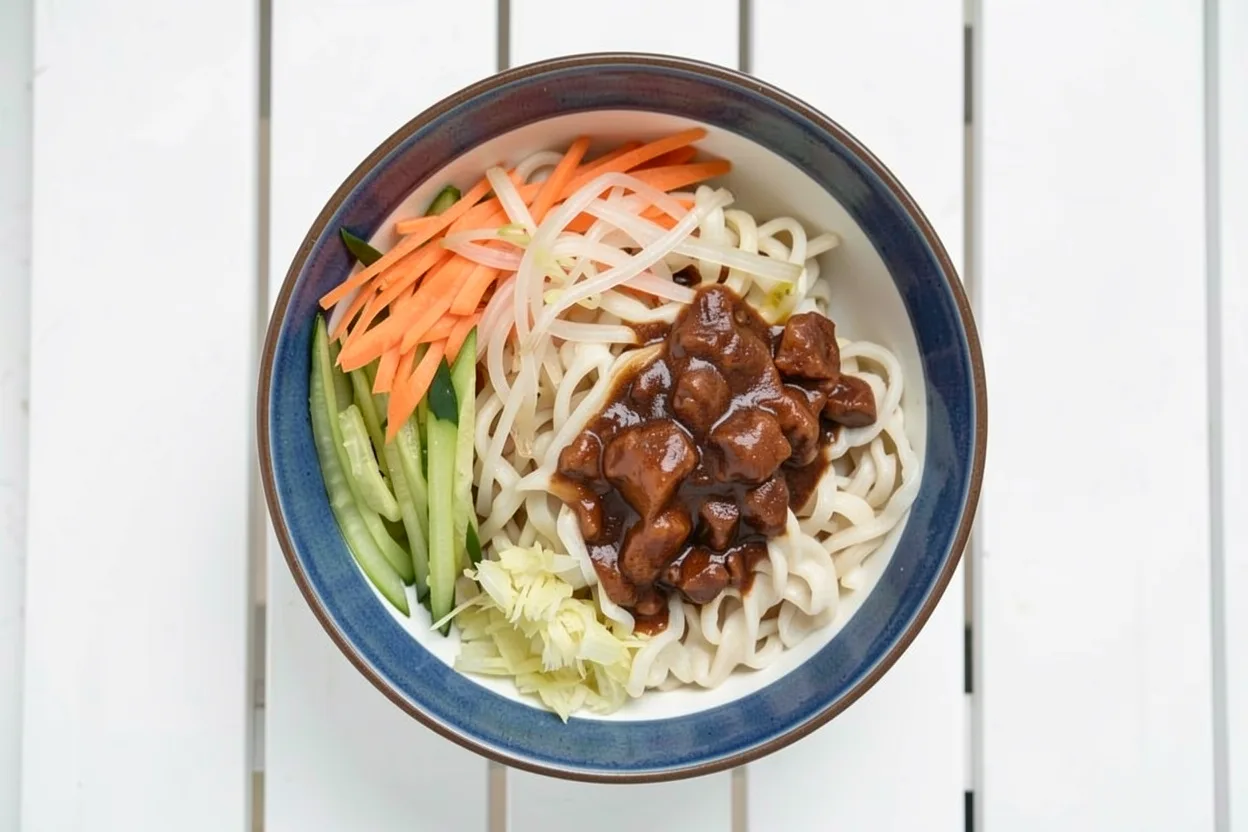
Lagyan ng zhajiang sauce ang lutong noodles at patungan ng mga gulay na nasa season — napakasarap!
Ladle the fried sauce over the cooked noodles and top with seasonal vegetables — delicious!
Hand-rolled zhajiang noodles: mabangong sarsa, malambot na baboy, at makunat na noodles.
Hand-rolled zhajiang noodles: fragrant sauce, tender pork and springy noodles.